An Ode to Persimmons

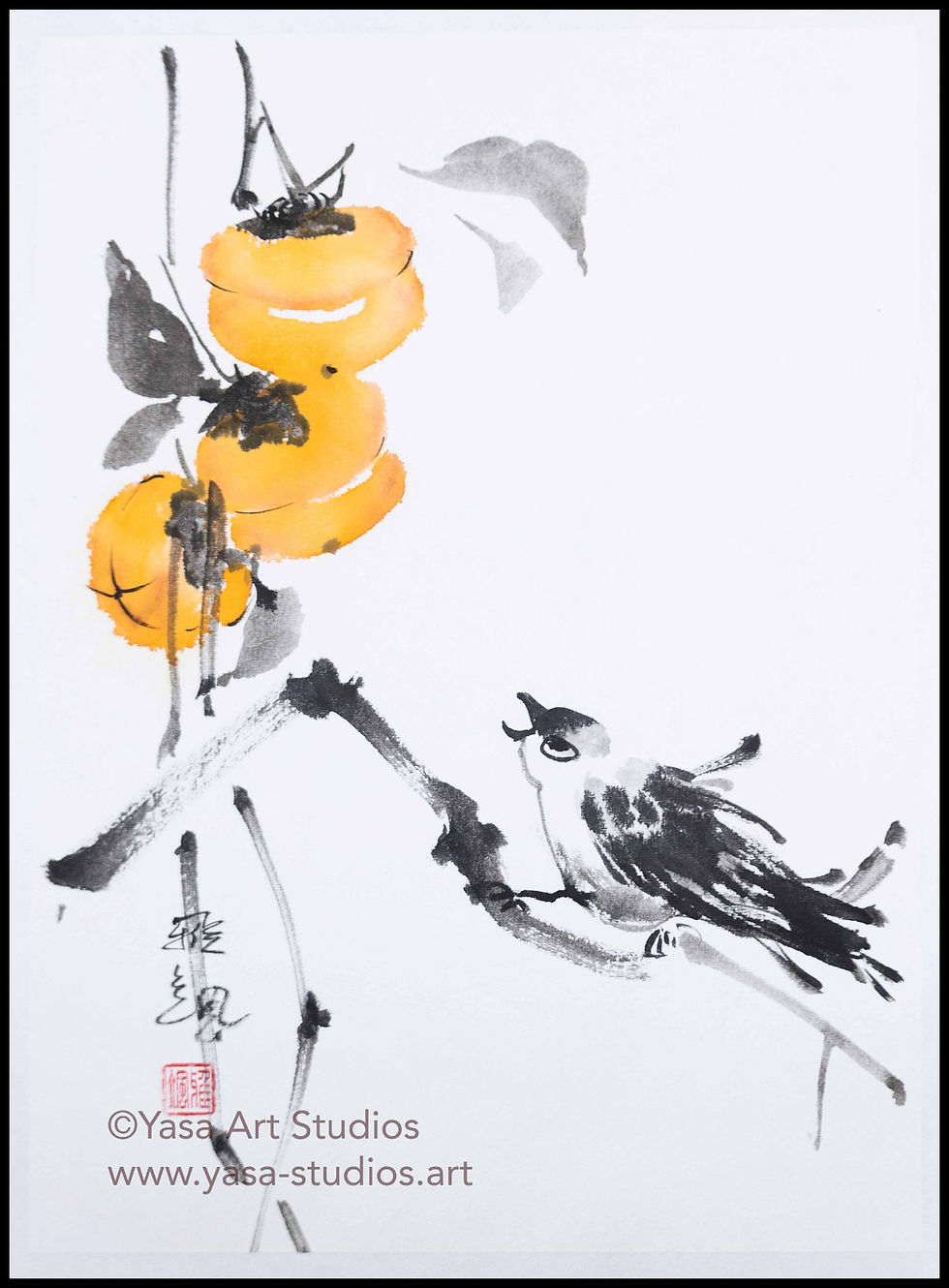
Once upon a time in Japan, there was a monkey and a crab. One day, the crab found a rice ball but met a sly greedy monkey. The monkey coaxed the crab to trade the rice ball for persimmons tree seeds and took off, thinking it got a good deal. The crab planted the seeds and a beautiful tree grew out of them, bearing bright orange fruit. The monkey, seeing the abundance of persimmons, climbed up the tree under the pretence of helping the crab. The monkey ate up the fruit and threw unripe persimmons at the crab, eventually killing her. Before dying, crab gave birth to an offspring. Crab's child assembled his friends (a chestnut, a bee, a usu, a piece of kelp, and a cow dung) and took revenge, ultimately killing the monkey.

There are several variations of the plot twists, identities of crab's friends, but the main characters of this blood-chilling suspense story – a crab, a monkey, and a persimmon tree – and their fate remain unchanged.
Persimmons are also central in folk tales in China and Korea. In Korea they protect against tigers and predict winter frosts. In China, persimmons are an auspicious fruit, symbolising good luck and happy life. Called “gift of the gods”, persimmon trees are said to possess seven virtues loved by the gardeners – long life, no bird's nests, lots of shade, no insects, leaves that look good in winter, tasty fruit, and nice foliage.
In Japan, there is a tradition of leaving one solitary persimmon (木守りor "kimori”) as a tree “guardian”. The tradition is called “kimori no kaki” and it is explained by a wish for a good harvest next year, expression of gratitude to the tree, a gift to the birds. It is also an offering to a traveller who may stop by to rest under the tree.

Persimmons are natives of Asia and they usually show up in the fall, symbolising autumn and start of winter.
***
三千の俳句を閲 し柿二つ
sanzen no haiku o kemishi kaki futatsu
looking through three thousand haiku
eating two persimmons
Haiku verse by Masaoka Shiki (1867-1902)

Images: The Met, Yasa Art Studios.


Comments